Colour and Surface Measurement for the Paint and Coating Industry
Accurate and Traceable Colour Data for Paints, Coatings, Varnishes, and other Speciality Coatings
How is Colour and Surface Measurement used in the Paint and Coatings Industry?
Colour and surface measurement is used in the paint and coatings industry to quantify how coatings look and perform across development, production and final quality control. Coatings are often judged first by appearance, so manufacturers need objective data to control consistency, establish clear targets and tolerances with customers and avoid the production or application of out of specification colour.
Stage / context | Typical samples | What is measured | Why it matters |
|---|---|---|---|
Development & formulation | Pigments, bases, binders, trial coatings | Colour is measured of materials, and pigments, typically compiled into a library for colour matching. Next trial formulations would be measured for performance and correction. | Defines target colour and ensures formulations can reproduce it within tolerance |
Production & application | Wet coatings, drawdowns, coated panels | Colour and appearance parameters that include gloss and gloss related measures such as Rspec and DOI | Detects variation during manufacture and after application |
Finished surfaces | Coated parts and products | Surface appearance | Confirms visual quality before release or customer approval |
In paints and coatings, colour and appearance measurement is used not only to control consistency but also to understand how a surface will be perceived in its final application. Factors such as gloss, texture and application method can all influence how light is reflected and therefore how colour is seen, meaning that small variations can result in visible differences on large surfaces. By using objective measurement alongside controlled visual assessment, manufacturers can distinguish between colour and appearance effects, maintain tight tolerances across batches and sites, and communicate specifications clearly with customers and partners. This enables more reliable production, reduces rework and supports the delivery of coatings that meet both technical and aesthetic expectations.
In the Paint & Coating industry, colour plays a significant role, and its consistency and accuracy are key indicators of a quality and brand identity. Getting the colour right first time and every time will increase efficiency.
- Reduce waste and environmental impact
- Save time and money
- Deliver a premium quality product to customers
Wherever you need to communicate colour - from idea through design, development, production to a final quality control - , our expertise can help install traceable and scalable colour data solutions for applications from raw materials through to finished products. To match colours and meet colour quality standards more efficiently, Konica Minolta offers exceptionally precise measuring instruments and software for use in a laboratory or directly in production.
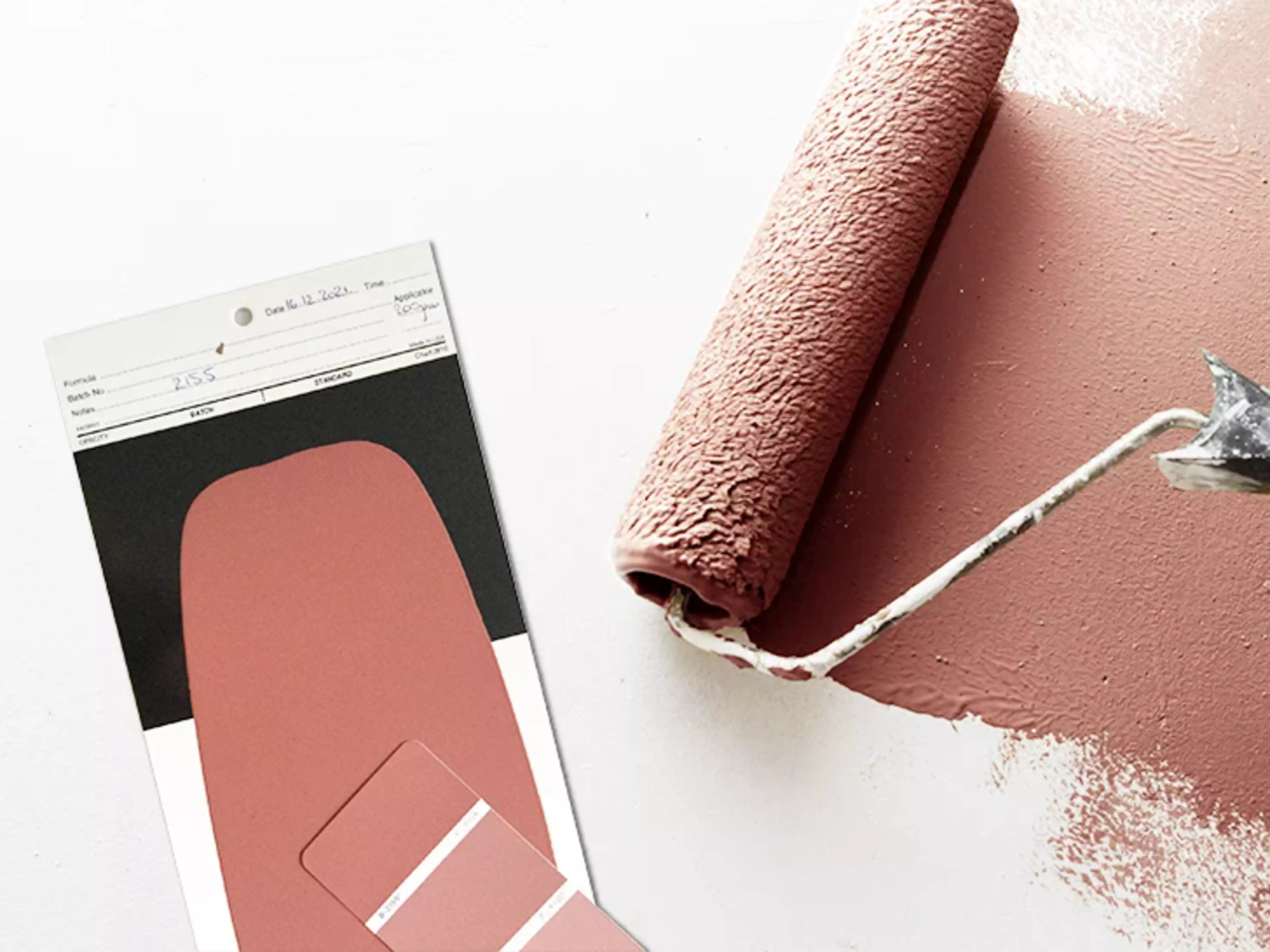
Colour is one of the easiest and most effective ways to stimulate a customer's attention to a product and the brand behind it
Benefits of Konica Minolta Measurement Technologies
Objective colour control from formulation to QC
Measure colour numerically instead of relying only on visual judgement. This supports more consistent formulation, batch approval and finished product control providing the business with improved certainty and data for decision-making.
Reduced waste, rework and production delays
By identifying colour or appearance variation earlier, manufacturers can correct batches early, helping to reduce scrap, repeat work, customer complaints and time lost in dispute resolution.
Better colour communication across the supply chain
Digital colour data, shared tolerances and defined measurement conditions make it easier for suppliers, manufacturers and customers to work from the same standard. This improves confidence when colour must be reproduced across different sites or production routes.
Measurement of colour and gloss together
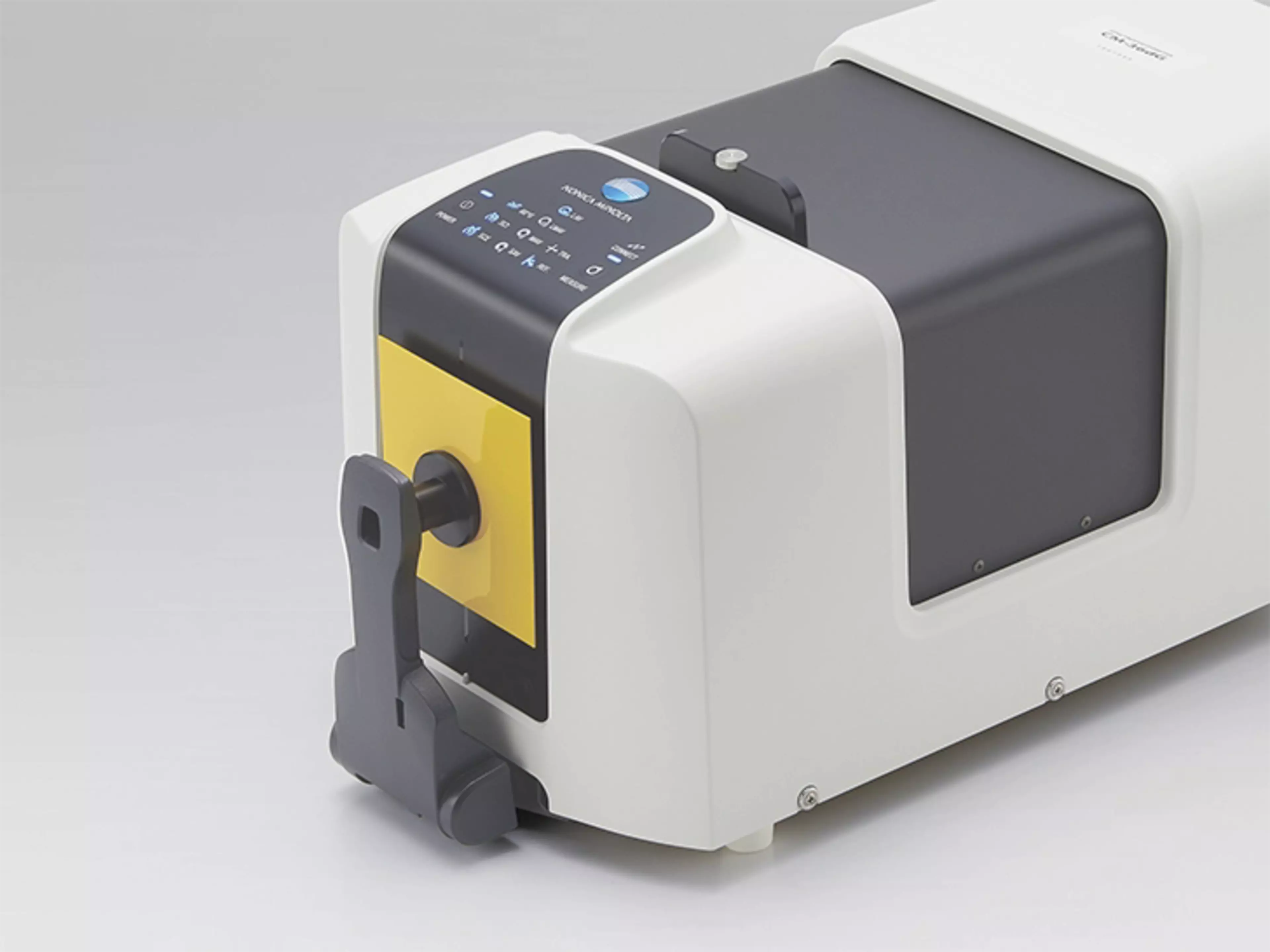
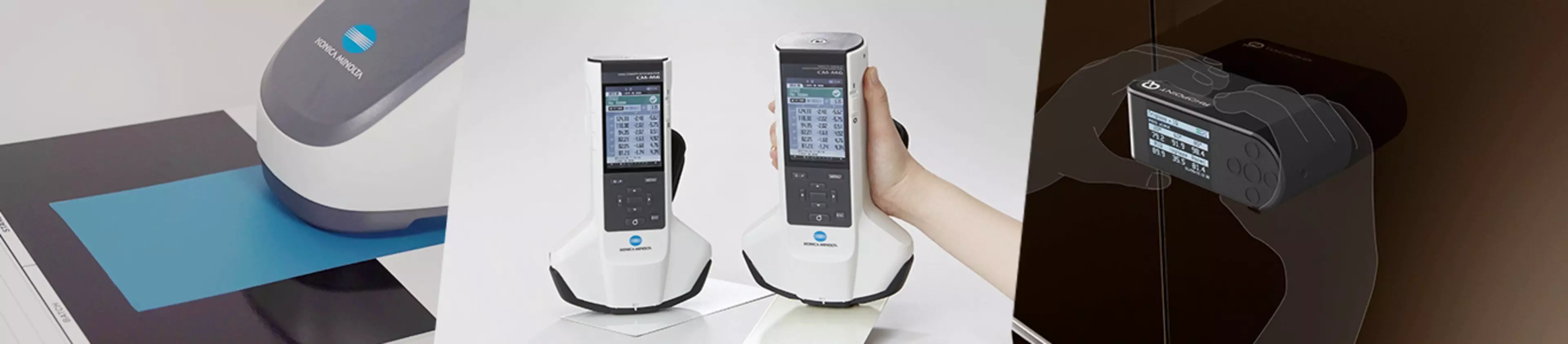
The Konica Minolta CM-26dG, CM-25cG and CM-36dG support simultaneous colour and gloss measurement. Measuring with a single device saves considerable time in sample presentation, data analysis and reporting.
Support for metallic and effect coatings
Multi-angle measurement allows manufacturers to quantify the changing appearance of metallic, pearlescent and effect coatings. This helps control finishes that cannot be adequately described by a single measurement angle.
Surface appearance beyond gloss
Through Rhopoint appearance measurement technologies, users can evaluate additional surface characteristics such as haze, DOI, orange peel, reflected image quality and surface harmony. This helps explain visible differences that may not be measured with colour data alone.
Traceable data for quality systems
Measurement data supports documented QC processes, internal audits, supplier communication and customer approvals. Combined with software and regular calibration, it provides a traceable basis for appearance control.
Example Applications of Paint and Coating Measurement Technologies
Colour matching and formulation
Spectrophotometers are used to measure target colours, evaluate trial formulations and adjust recipes. Colour data helps formulation teams reduce visual trial and error and improve the efficiency of matching new shades, customer samples or existing product standards.
Wet and dry colour quality control
Measurements can be made on wet or dry samples depending on the process and product requirement. Comparing samples against a stored target helps QC teams confirm whether the material will deliver the intended appearance after application and drying or curing.
Drawdown and coated panel assessment
Drawdowns and coated panels provide a controlled way to evaluate colour, gloss, opacity and surface appearance. Instrumental measurement helps compare batches, application conditions, substrates and formulation adjustments under repeatable conditions.
Metallic and effect coating measurement
Multi-angle spectrophotometers are used to characterise metallic, pearlescent and effect finishes. Measurements at several angles help quantify colour travel and visual effect, supporting better matching between coated parts, panels or production sites.
Gloss and surface appearance control
Gloss meters and appearance instruments help evaluate surface finish in more detail. Parameters such as gloss, haze, DOI and orange peel can be measured to understand whether a coating meets the required visual quality.
Road markings and functional coatings
Some coatings are judged not only by colour but also by visibility, surface finish and compliance with application requirements. Portable measurement enables checks on applied materials and supports consistent evaluation outside the laboratory.
Transparent and translucent coatings
Benchtop spectrophotometers with transmission capability can be used to evaluate transparent or translucent coatings, films, lacquers, dyes or liquid materials. This supports colour control where the coating interacts with substrate colour or transmitted light.
Final approval and customer communication
Controlled viewing cabinets (light booths) and digital colour data can be used together for final approval. This allows customers and suppliers to assess colour under defined lighting while retaining objective measurement data for documentation and future comparison.
Solutions for Colour and Appearance Measurement of Paint and Coating
The below pages provide more specific application advice and instrumental solutions to Paint and Coating tasks