The colour of an object we see is dependent on the light we see it in

Maybe your city or town has replaced sodium streetlights with LED lighting, if so, you will most likely have noticed a profound change in how urban environments appear. The once familiar orange glow of high-pressure sodium lamps offered poor colour rendering, greens became brownish, reds appeared dull, and differences between similar hues were hard to distinguish. Modern white LEDs, by contrast, provide a broader and more balanced spectral output, revealing far more “detail” in the colours around us.

Colour appearance depends on light. The colour we see is our eye and brain’s interpretation of the wavelengths reflected from the available light by the surfaces around us, and surfaces cannot reflect (or absorb) wavelengths that are not present in the available lighting (with a slight caveat for UV fluorescence where light outside the visible spectrum is absorbed and emitted at a different wavelength by a Fluorescent Whitening Agent. See our whitepaper on Whiteness for more information.

Whether in manufacturing, design, or visual inspection, understanding how lighting influences colour perception is essential for accurate evaluation and communication.

Agreeing a colour sample under a light that we do not control is agreeing to a colour that we do not truly understand. Indeed, although to a lesser degree than the difference between a Daylight Standard Illuminant and a Fluorescent Standard Illuminant the daylight outside our window changes with latitude, season, weather etc.

From a colour control perspective, producers can rarely control the lighting in the environment that the customer sees the product, so it is increasingly common to design and formulate to mitigate or eliminate these effects.
At a Glance

Lighting defines how colour is seen. This article explains how CIE standard illuminants provide consistent references for colour evaluation, why chromatic adaptation affects perception, and how to distinguish colour inconstancy from metamerism. It also examines how testing across multiple illuminants and using full spectral data helps manufacturers maintain reliable, consistent colour across materials, environments and markets.

Standard Illuminants

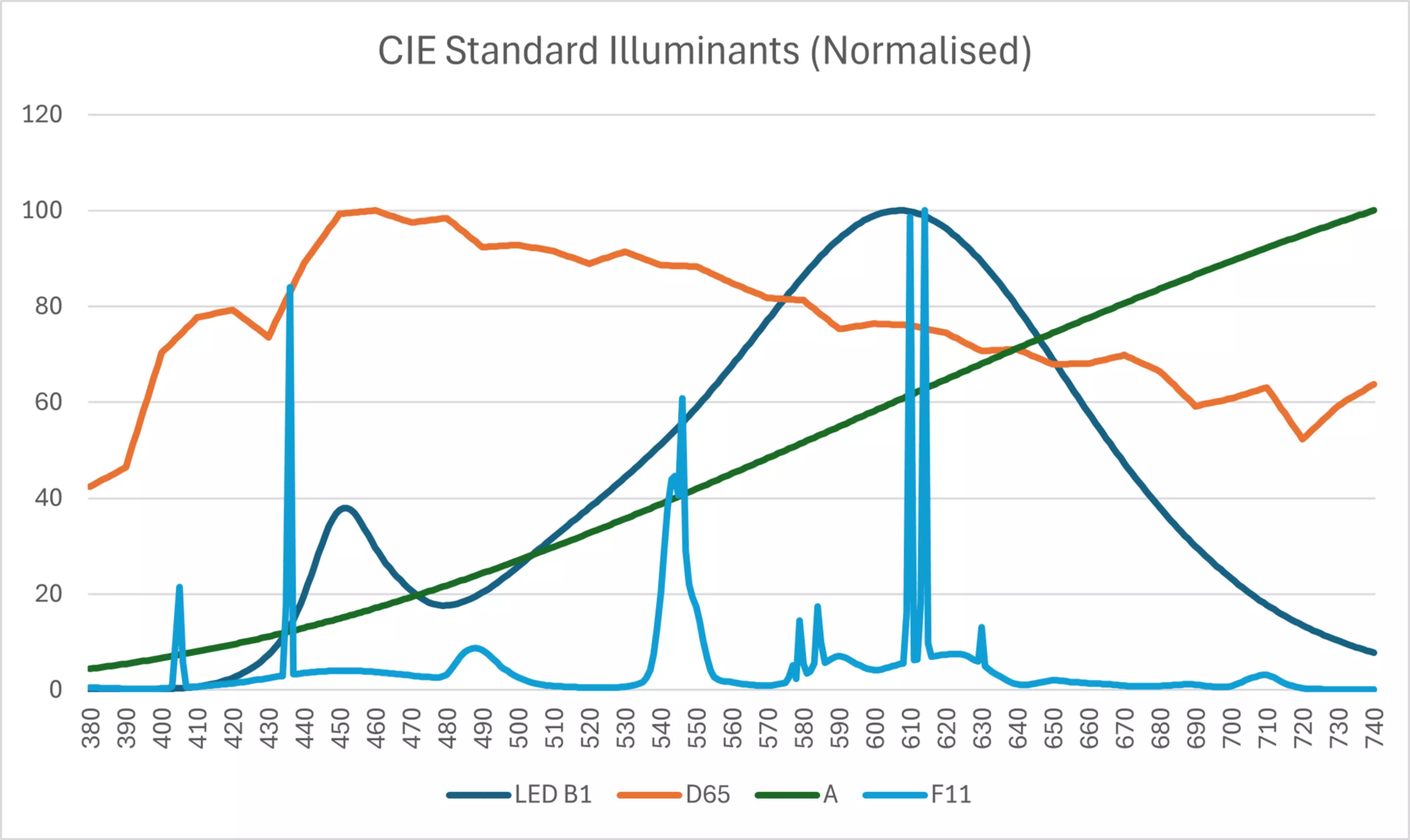
Accurate colour measurement requires an agreed reference for the light that is used to illuminate the object. The Commission Internationale de l’Éclairage (CIE), or International Commission on Illumination, defines and maintains these references. The CIE’s standard illuminants are not physical light sources but mathematical representations of typical spectral power distributions (SPDs). They serve as theoretical models of how real-world lighting behaves, allowing colour values to be calculated and compared consistently across instruments, locations, and time.

Each illuminant describes an “average” or “idealised” light type. For example, Illuminant D65 represents average midday daylight, while Illuminant A models tungsten incandescent light. By referring to these defined SPDs, laboratories and manufacturers can replicate the same conditions digitally and numerically, even if they are working with different lamps or measurement systems.

Commonly used illuminants include:

Illuminant

Approx. Colour Temperature

Application

A

2856 K

Simulates incandescent lighting, typical of domestic environments.

D50

5000 K

Represents horizon daylight; standard in graphic arts and printing.

D65

6504 K

Represents average daylight; used in most industrial colour quality control.

LED B Series

Varied

Represent different LED sources.

Each illuminant has a distinct spectral power distribution (SPD). Even if two illuminants share a similar white point, their SPDs can differ significantly, altering how certain materials or pigments appear. For accurate and repeatable colour control, it is therefore vital to specify both the illuminant and observer conditions (e.g. D65/10°) when reporting measurements.

In practice, Fluorescent lighting has been largely replaced by LED technology in retail, commercial, and residential environments. Indeed in the European market the phasing out of Fluorescent lamps (with limited exceptions) has been in place since 2023. The distinctive “spiky” spectral distributions of fluorescents, long a source of colour inconstancy and metamerism are therefore increasingly less common.

So whilst you may still find illuminants such as F11 written in standards and standard operating procedures, the likelihood of a product being observed under such light is increasingly rare.

One of the newer challenges is the diversity of LED light sources. While marketed under familiar descriptors such as “cool white” or “warm white”, their spectral curves vary widely depending on the LED’s phosphor composition, efficiency design, and manufacturer. Some modern LEDs also incorporate narrow-band coloured emitters for decorative or high-impact lighting effects. As a result, the range of possible SPDs is broader than ever before. Naturally, a broad set of Standard Illuminant LEDs are specified and available inside Konica Minolta Software and the firmware of newer Spectrophotometers.

For manufacturers and quality professionals, this shift means that traditional daylight and fluorescent-based standards no longer represent all viewing conditions encountered by customers. The software supplied by Konica Minolta Sensing, including SpectraMagic™ NX2 and Colour Matching Software allows operators or project owners to configure a huge range of standard illuminants including newer LED standards and also to add user measured lightsources measured with an illuminance spectrophotometer or spectroradiometer like the CL-500A or CS-3000 to ensure producers can evaluate products in a way that is visually consistent with the modern lighting landscape.

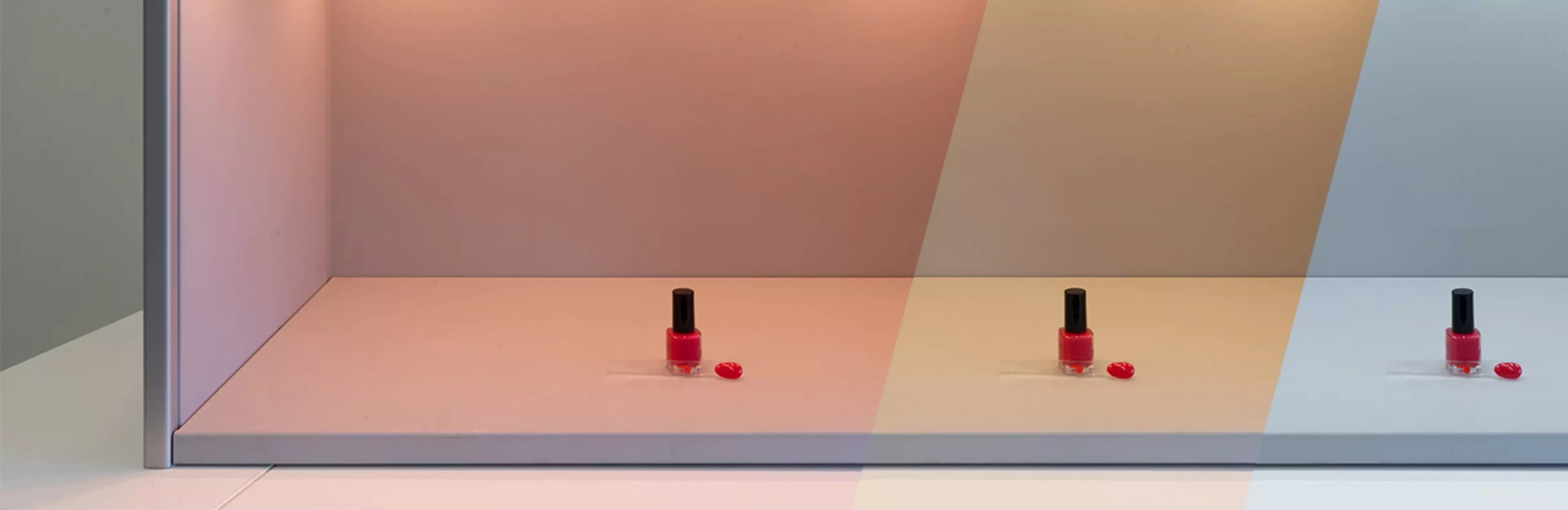
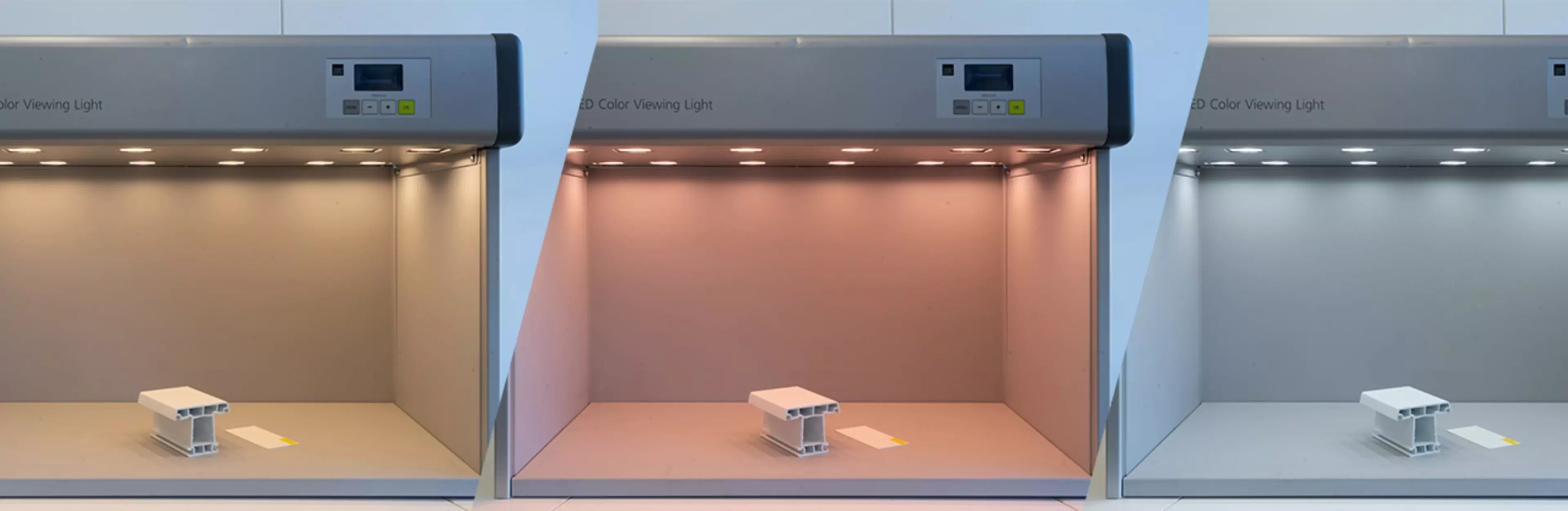
White samples under different Illuminants

Colour Appearance and Chromatic Adaptation

Every object reflects light differently depending on its surface and material properties. What we perceive as colour arises from the combination of this reflected light and the characteristics of the light source itself.

However, our visual system continuously adjusts to the prevailing illumination, a process called chromatic adaptation. This is why a white sheet of paper still looks “white” under both cool daylight and warm indoor light, even though the actual spectral composition of the light reaching our eyes is very different.

In colour measurement, chromatic adaptation is modelled mathematically to predict how a colour observed under one illuminant will appear under another. These calculations are essential in industries where products move between environments, such as packaging viewed in-store under fluorescent light but used at home under LED or daylight.

Why is the Illuminant/illuminants important

Spectrophotometers allow the operator to measure the colour of a sample under multiple illuminants simultaneously. Using the data from more than one illuminant helps to identify colour quality issues like metamerism.

Metamerism

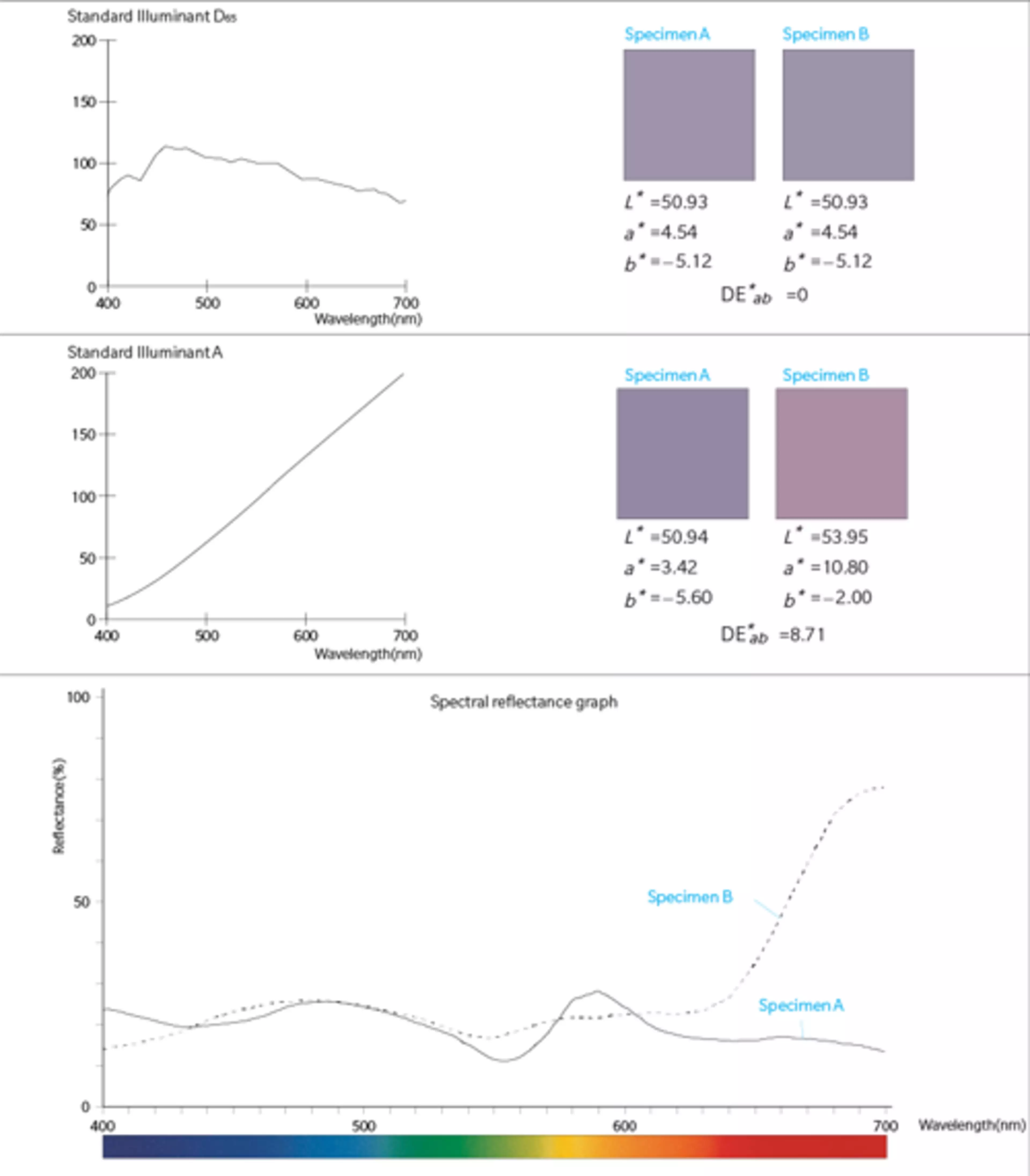
Metamerism occurs when two samples appear to be the same colour under one light source but differ under another. This happens because their spectral reflectance curves (how they reflect each wavelength of light) are not the same.

In practice, metamerism is often encountered when different pigment or dye combinations are used to produce samples that are intended to be a colour match. Sometimes this may be because the same pigments are incompatible or not available between material types or because either the substrate or colourant supplied has changed. A coating and a plastic part might appear identical under daylight (Illuminant D65) but show noticeable differences under warm LED or fluorescent lighting.

There are several forms of metamerism:

  • Illuminant metamerism – colour matches that fail when the light source changes.
  • Observer metamerism – differences that arise because individual observers perceive colour differently.
  • Geometric metamerism – mismatches caused by changes in viewing or illumination angle, especially with metallic or textured surfaces.

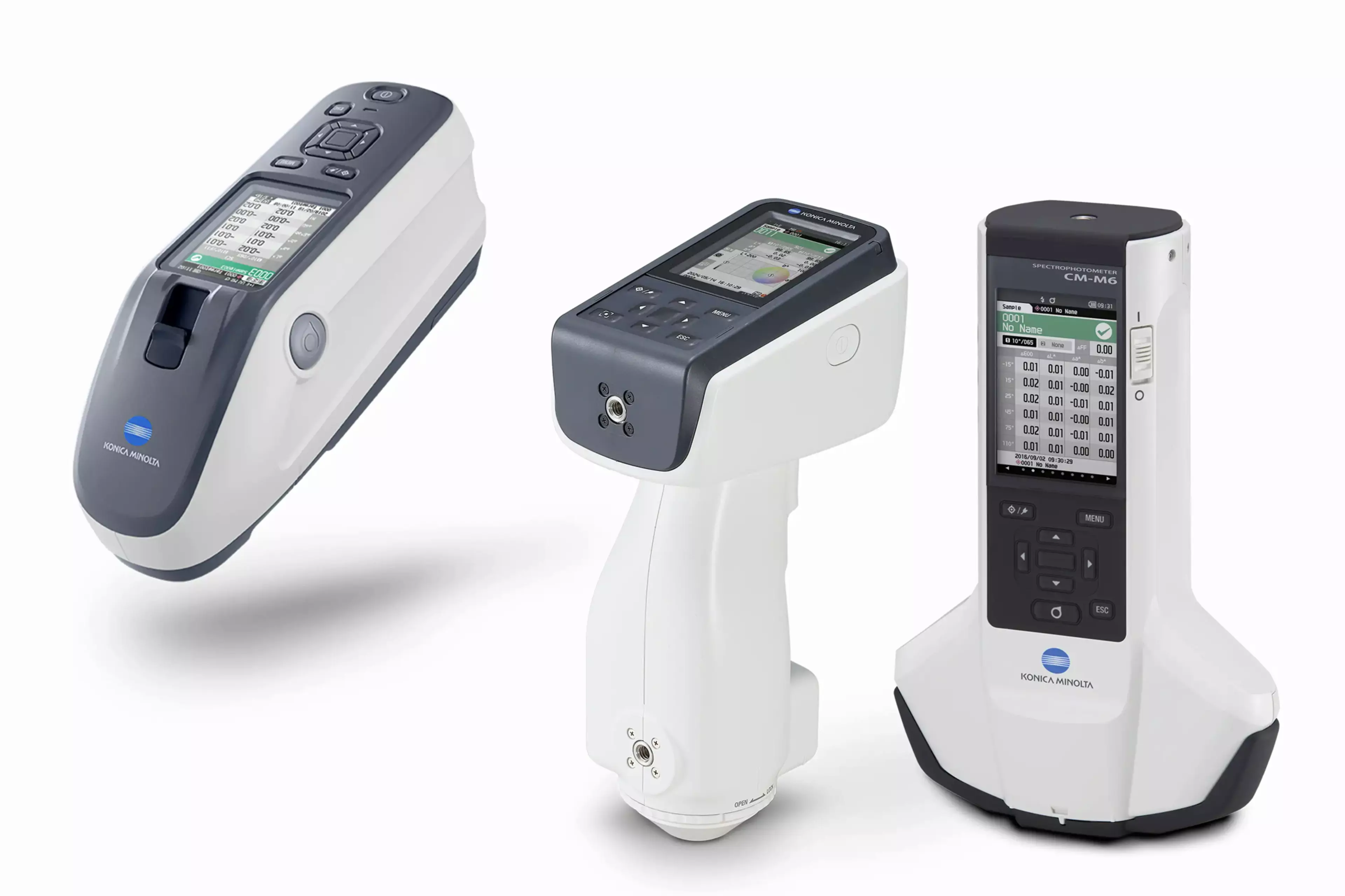
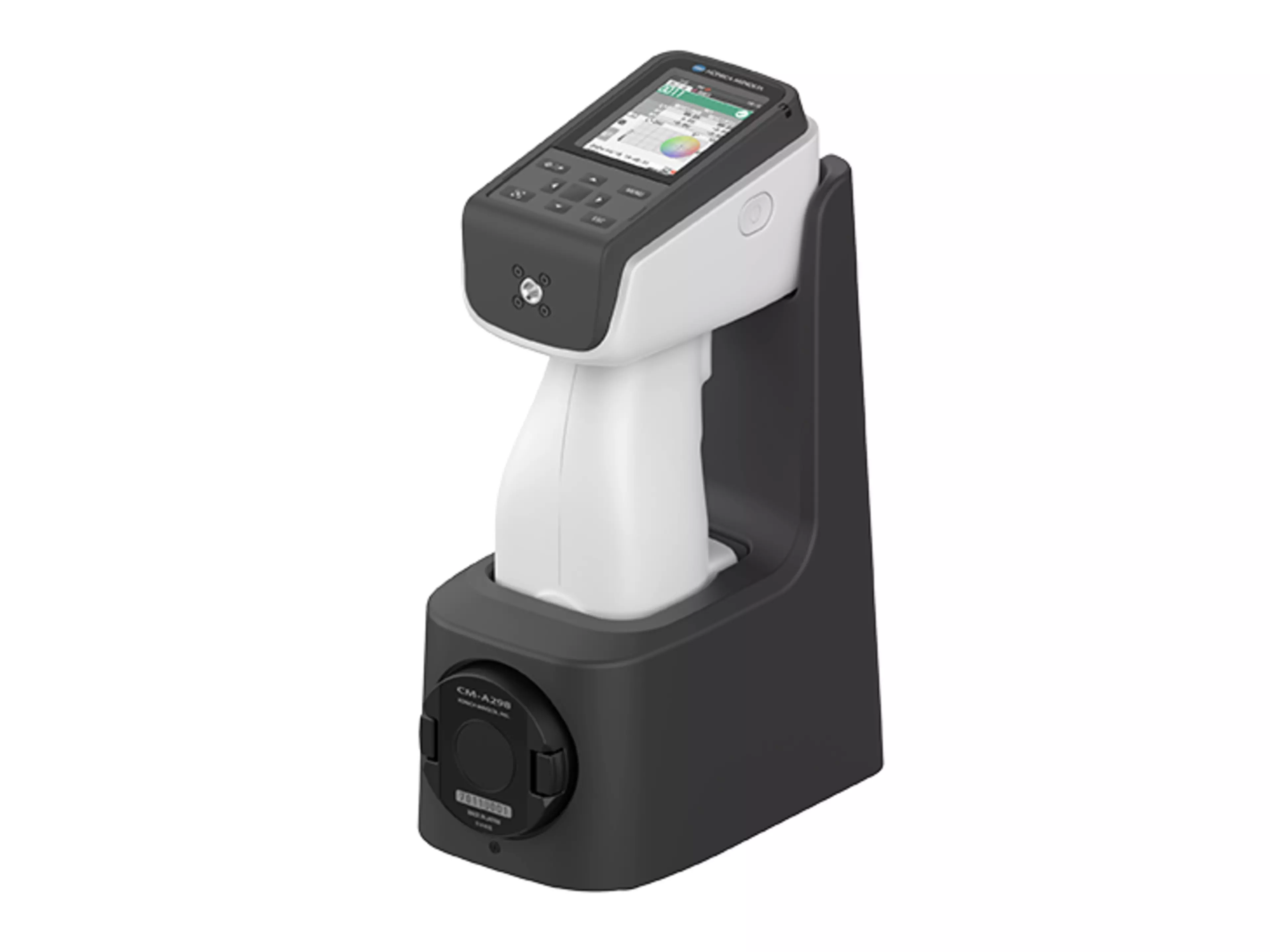
The most reliable way to identify metamerism is by using a spectrophotometer, which measures the full spectral reflectance curve of a sample. This data allows quality teams to simulate appearance under different illuminants and calculate metamerism indices before approval. All spectrophotometers supplied by Konica Minolta Sensing such as the CM-17d and CM-36dG include the Metamerism Index and both spectrophotometers and software allows for the display and overlap of measured spectral reflectance curves.

Metameric Samples
2 samples that match under D65 but are metameric when viewed under Illuminant A.

2 samples that match under D65 but are metameric when viewed under Illuminant A.

Colour Inconstancy

While metamerism compares two materials, colour inconstancy refers to how a single object’s apparent colour changes under different lighting. This could mean that a product looks correct in the factory but unexpectedly different in a customer’s home. As we have learnt above, it is inevitable that colours look different under sufficiently different light sources, inconstancy here is referring more to an unexpected shift in hue which can be challenging to consistently characterise and is in itself quite dependent on the “original” colour.

For instance, a grey textile might appear neutral under daylight but take on a green or violet hue under certain LEDs. This happens because the object’s reflectance interacts with the light’s spectrum, producing different tristimulus values.

Colour inconstancy can be assessed by measuring the same sample under multiple standard illuminants and comparing the resulting colour differences (ΔE values). Understanding this effect is particularly important for brands seeking consistent visual identity across diverse lighting conditions.

Conclusion: Managing Lighting and Colour

To minimise issues caused by lighting and colour inconstancy:

  1. Specify standard illuminants in all measurement and quality documents. Measurement files generated in SpectraMagic™ NX2 can be created with the measurement conditions locked into samples or datasets.
  2. Use viewing booths that replicate multiple standard illuminants (e.g. D65, A, and F11) to evaluate samples visually. Konica Minolta supply Just Normlicht viewing cabinets which utilise a patented LED calibration allowing for a variety of standard illuminants and coloured lighting to be repeatably output.
  3. Measure with spectrophotometers such as the CM-26d, CM-17d, CM-36dG etc rather than a colourimeter like the CR-400 to record full spectral data and the Metamerism Index (MI).
  4. Evaluate metamerism indices and ΔE under multiple illuminants to ensure stability.
  5. Train teams to follow best practice for both visual assessment, instrumental colour measurement and colour communication.

Consistent lighting control not only improves product quality but also strengthens brand reliability, ensuring that a colour looks right wherever it is seen.

Share:

Contact

Ewald Rath
Ewald Rath

Colour & Appearance Technology Manager EMEA