Spectrophotometers vs. Colorimeters: Tools for Traceable Measurement of Colour

Colour is one of the first signals of quality a customer notices. Whether in food, textiles, plastics, automotive coatings or packaging, ensuring that colour appears exactly as intended is critical. In industry, colour measurement instruments make this possible by converting a visual impression into traceable numerical data and eliminating subjectivity.

Two widely used technologies are colorimeters (such as the CR-400/CR-410) and spectrophotometers (such as the CM-17d or CM-36dG). At first glance, both appear to perform a similar task: measuring colour. But the way they work, the data they provide, and their suitability for different applications are distinct. Understanding these differences will help you choose the right tool for your process.
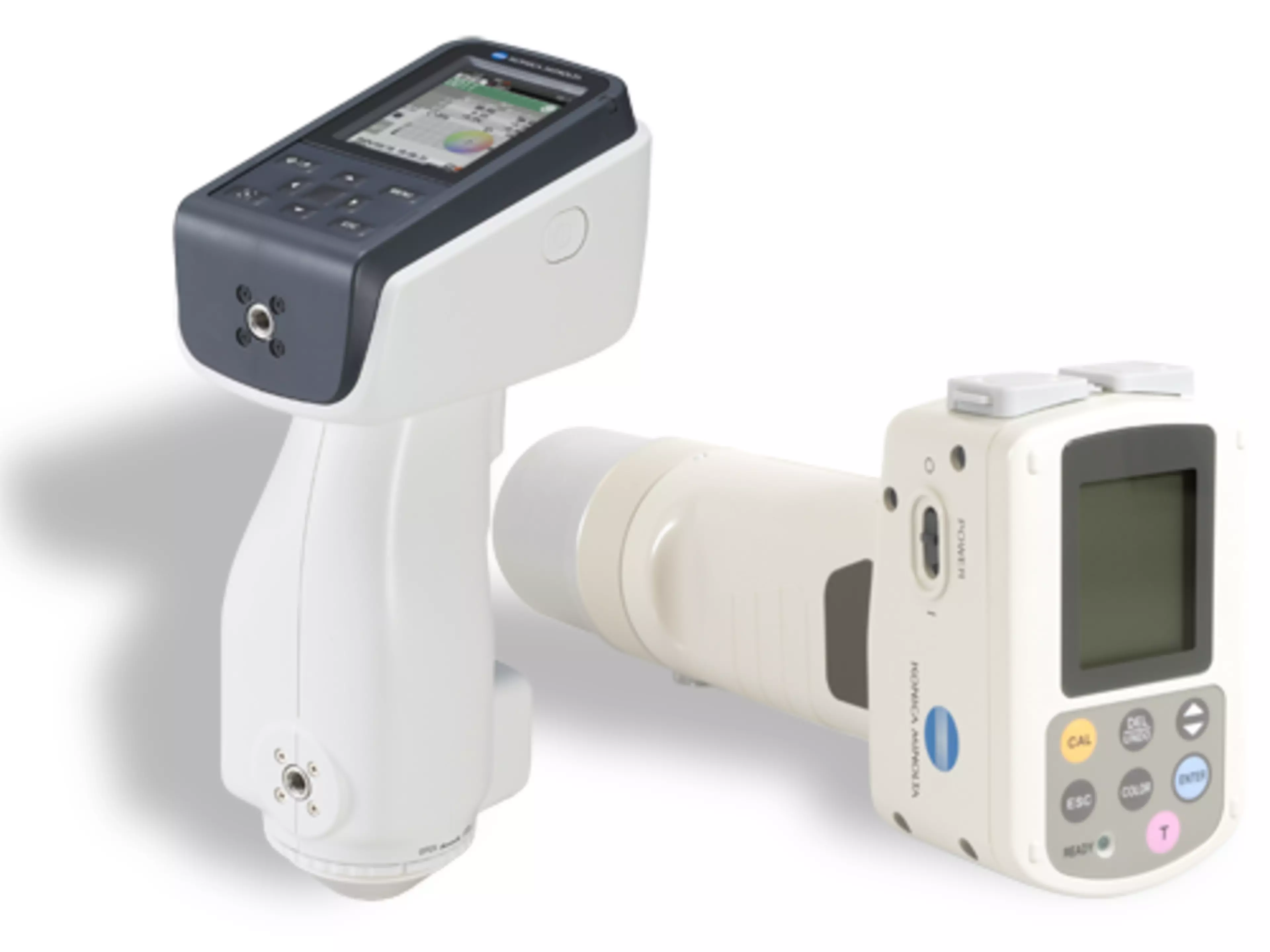
At a Glance: Spectrophotometers vs Colorimeters

Colorimeters measure colour with three filters aligned to human vision and can use large apertures, useful for averaging non-uniform samples. Spectrophotometers measure data for spectral reflectance, providing colour data that correlates with human vision but with more information, allowing them to detect metamerism, and simulate multiple illuminants.

Portable spectrophotometers have smaller apertures restricted by their sphere size, while benchtop spectrophotometers offer greater versatility, often including the ability to measure in transmission mode at the expense of portability.

Why Instrumental Colour Measurement Matters

Human beings perceive colour through the combination of three: light, the object, and the observer. Each observer’s vision and each lighting conditions are often different, two people may disagree about the colour of the same object. To achieve consistent results, industries use traceable instruments that measure colour in line with CIE (Commission Internationale de l’Éclairage) standards.

Without this objectivity, colour communication is imprecise causing additional work and sometimes unnecessary misunderstandings. A fabric that looks a rich bright blue under daylight may appear dull under interior lighting. A batch of biscuits may vary in golden tone depending on oven conditions. Colour measurement technologies provide the common language needed to detect such differences and ensure customer expectations are met.

Colorimeter

What is a Colorimeter and How Does It Work?

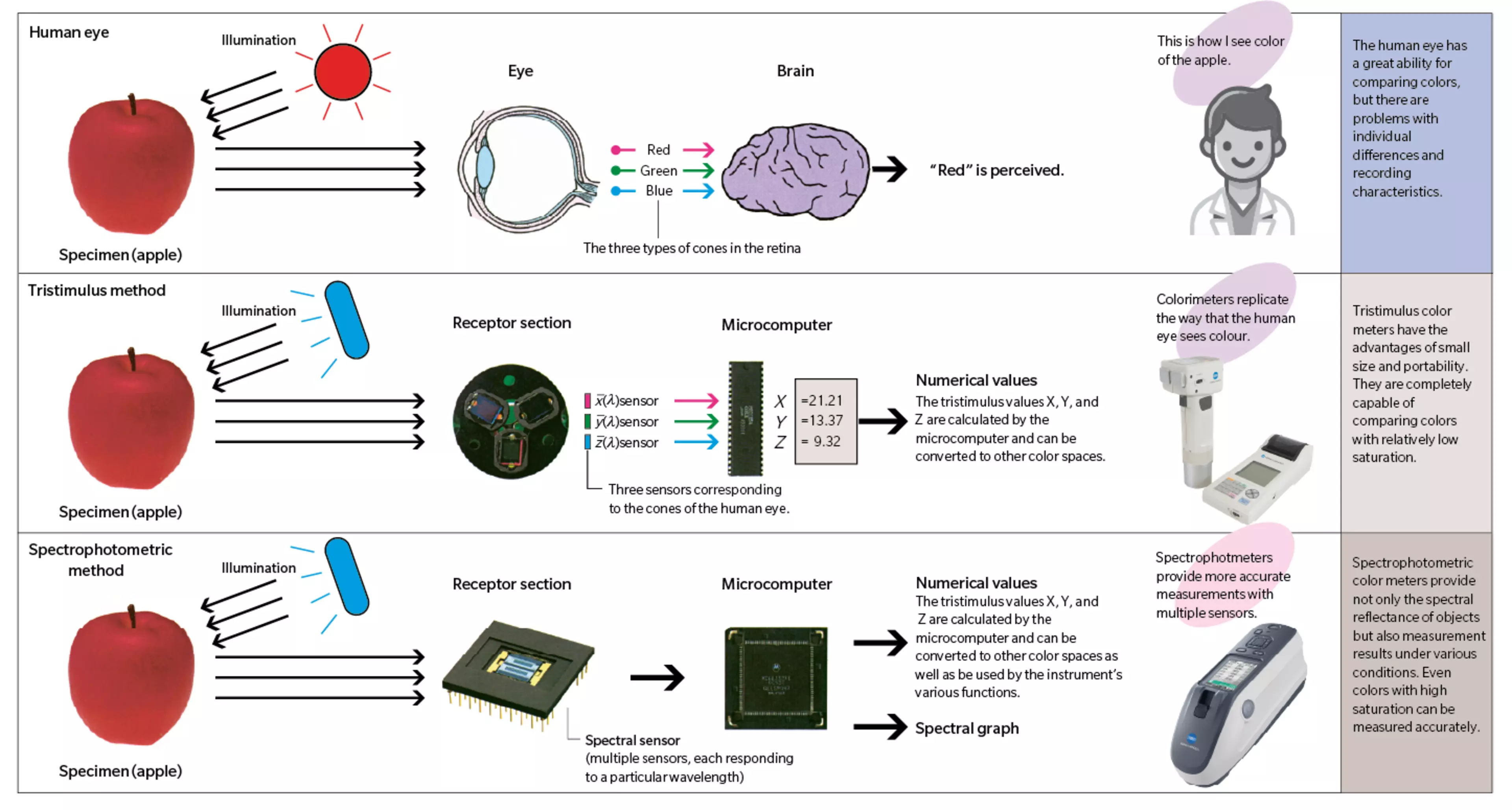
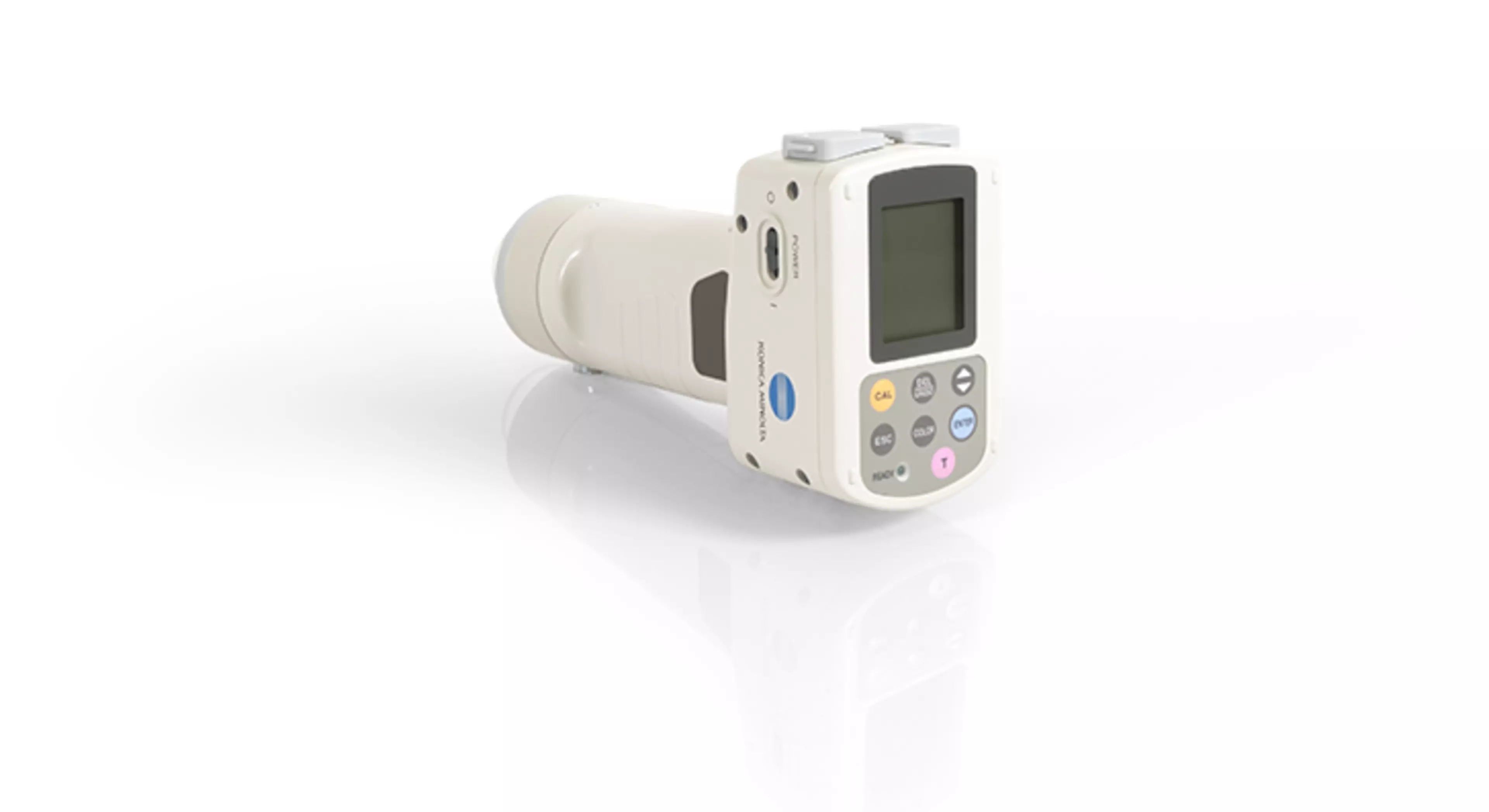
A colorimeter is a tristimulus instrument. It measures colour in a similar way to the cells in the human eye. Light reflected from a sample is filtered into three bands: red, green, and blue, corresponding to the sensitivity of the cones in the human eye. These signals are then converted into tristimulus values (X, Y, Z) and reported in widely used colour spaces such as CIE L*a*b* or XYZ.

CR-400 lay down with display view

Key Features of Colorimeters

  • Direct Human Vision Correlation: colorimeters measure colour through three filters aligned to the eye’s sensitivity curves, reporting relatively simple to use colour coordinates such as CIE L*a*b*.
  • Large Aperture Options: Portable colorimeters, such as the Konica Minolta CR-410 (50 mm aperture), can feature comparatively large apertures. This makes them particularly useful for averaging non-uniform samples like biscuits, stone or wood, where a small aperture would require multiple measurements to characterise the visual effect of the sample.
  • Portable and User-Friendly: Their simpler optical design makes them robust, straightforward to operate, and easy to deploy in production environments.

Limitations of Colorimeters

  • Single Illuminant: Most colorimeters use a single illuminant for each measurement (the CR-400/410 uses either D65 or C). This restricts a colorimeter's ability to predict how a colour will look under different lighting.
  • Less Precision: Compared with spectrophotometers, repeatability and inter-instrument agreement are lower, which can cause problems when comparing results across devices.
  • No Spectral Data: Without full spectral reflectance curves, colorimeters cannot detect metamerism (when two colours look identical in one light but different in another).
  • Inadequate for Colour Formulation: Recipes for pigments, dyes, or coatings require full spectral information.

Spectrophotometer

What is a Spectrophotometer and How Does It Work?

A spectrophotometer measures colour in more detail. Instead of three filters, it uses a diffraction grating to separate reflected light into its component wavelengths throughout the visible spectrum (typically 400–700 nm). Multiple sensors then measure reflectance at each interval, often every 10 nm.

From this spectral data, the instrument can calculate tristimulus values and any colour space coordinates. Crucially, it can also simulate how the colour will appear under different standard illuminants such as D65 (daylight), A (incandescent), or modern LED spectra.

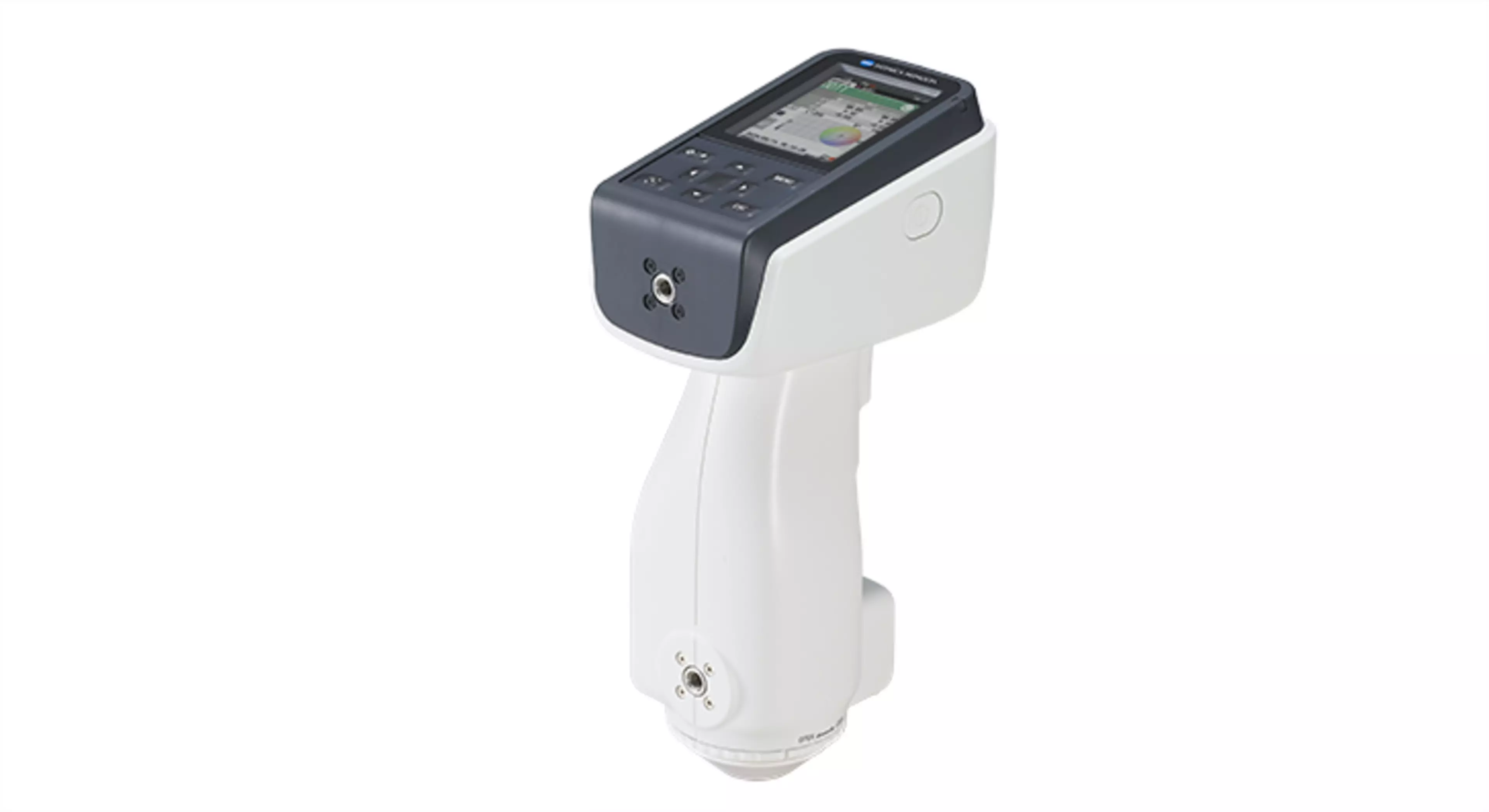
CM-17d spectrophotometer on a plain background

Key Features of Spectrophotometers

  • Detailed Data: In addition to CIELAB values, spectrophotometers provide spectral reflectance curves that reveal the composition of colourants.
  • Versatility: Available in portable (handheld) or benchtop models, with benchtop models often providing the option for measuring both reflectance and transmittance (transparent liquids, films, or glass).
  • Multiple Illuminants: Stored spectral power distribution data allows results to be recalculated under different lighting conditions, identifying issues such as metamerism.
  • Essential for Colour Formulation: Software can use spectral data to predict recipes for dyes, coatings, or plastics.

Considerations and Challenges

  • Complexity: More detailed colour data may mean that operators may require training to interpret spectral data correctly.
  • Sample Preparation: Spectrophotometers provide more control when measuring with consideration for gloss or surface. Using the correct geometry and consistent handling is essential.

Certain special-effect colours, such as metallic or pearlescent coatings and fluorescent materials, require additional measurement control. Multi-angle spectrophotometers are used for metallics to capture face and flop differences, while UV-controlled instruments ensure fluorescent samples are measured as perceived.

Understanding Spectrophotometer Measurement Geometries

Measurement geometry describes how the instrument illuminates and “views” the sample. It significantly affects results, especially for glossy or textured surfaces.

  • 45°/0° or 0°/45° geometry: Used in instruments such as the Konica Minolta CM-25cG. This excludes specular reflection and approximates how the human eye perceives colour on surfaces like painted panels or packaging.
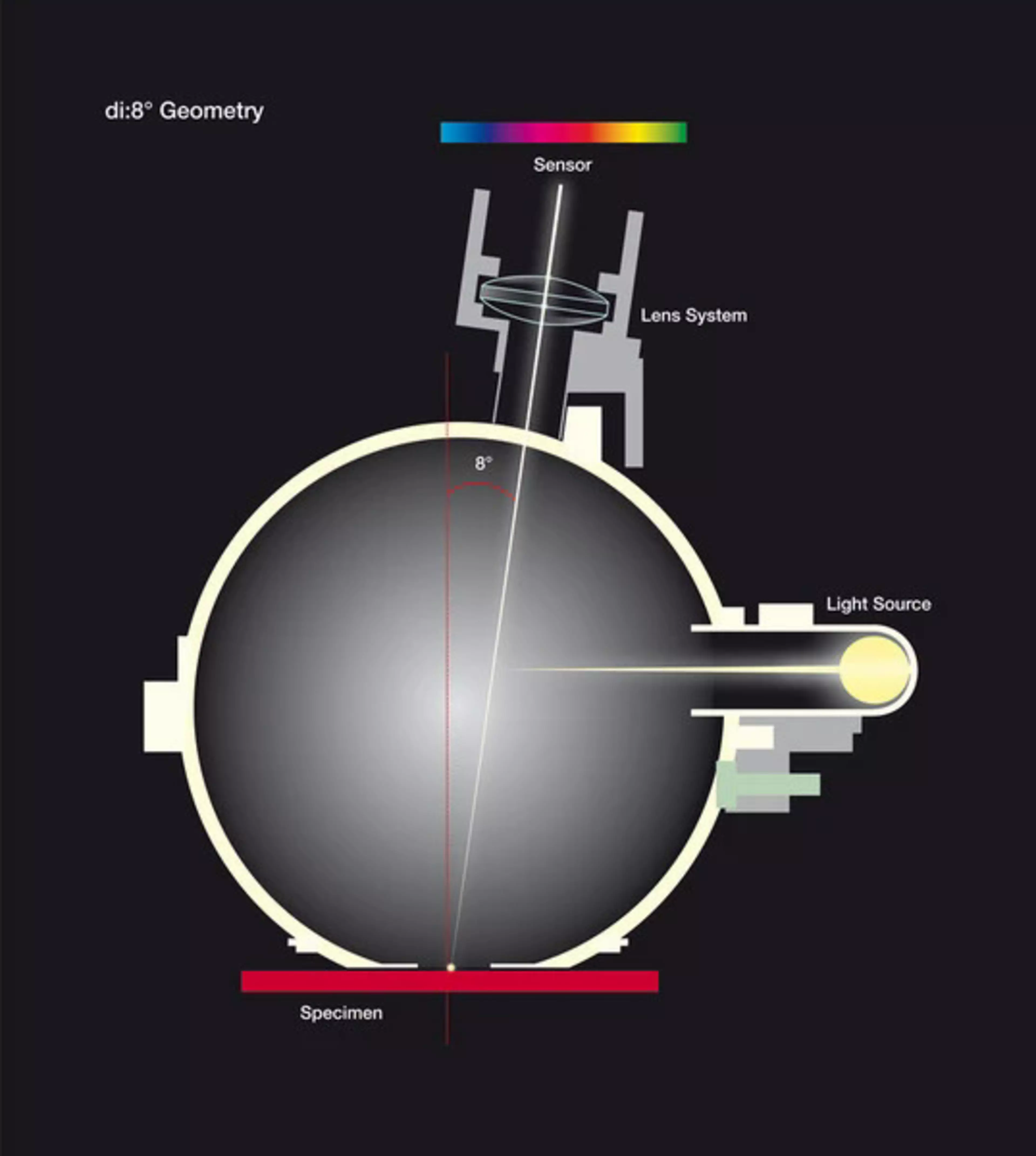
  • d/8° geometry: Found in models like the CM-26dG or CM-36dG. Here, an integrating sphere provides diffuse illumination, and the detector measures at 8°. Measurements can be made with SCI (specular component included) to capture total appearance, or SCE (specular component excluded) to approximate visual assessment.

When measuring glossy or textured samples, the choice between SCE (Specular Component Excluded) and SCI (Specular Component Included) becomes critical. The SCE mode removes mirror-like reflections, approximating how the human eye perceives colour on the surface. SCI, by contrast, includes specular reflection to measure total appearance.

Even when the material and colourants are identical, surface condition can influence perceived colour. A smooth, glossy surface will reflect more specular light and appear brighter, while a roughened surface scatters light diffusely and can appear duller or lighter. Spectrophotometers with SCI/SCE modes allow measurements to be correlated to visual perception or to total reflectance depending on the application.

diffuse 8 no gloss trap
Metameric Samples
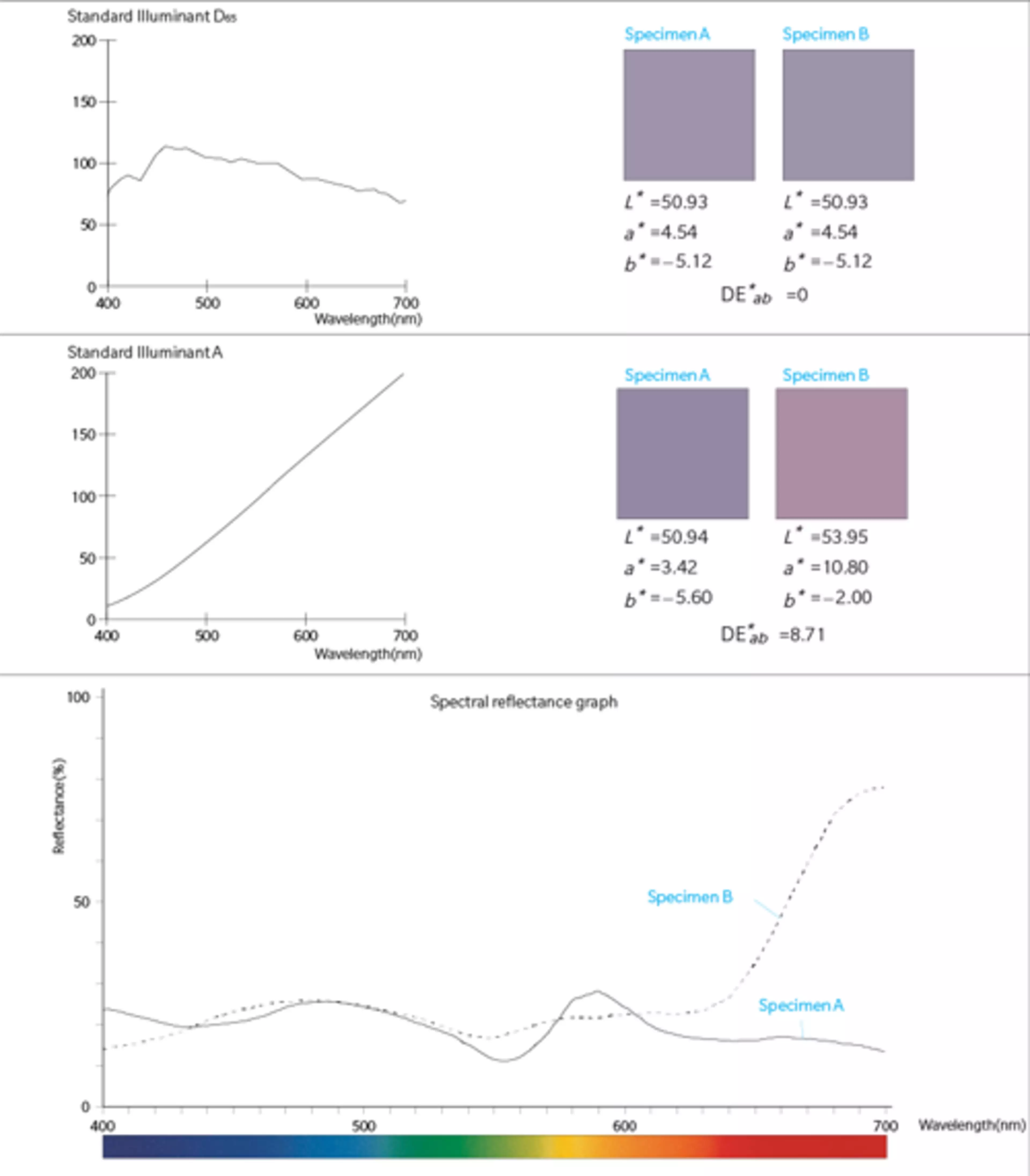
Spectral Data that shows 2 samples that are metameric

Metamerism: A Problem Only Spectrophotometers Can Solve

One of the key reasons to choose a spectrophotometer is the problem of metamerism.

Spectrophotometers can simulate how colours appear under CIE standard illuminants such as D65 (average daylight), A (incandescent light), and modern LED profiles. This capability is essential for identifying metamerism, where two samples match under one light source but diverge under another.

Imagine two fabrics: under daylight they match perfectly. But under LED showroom lighting, one looks greener, the other more yellow. A colorimeter, which measures only under a single illuminant, cannot predict this. A spectrophotometer, however, records full spectral data and can simulate colour appearance under any defined light source.

How the eye, a colorimeter and a spectrophotometer "see" colour

Colorimeter vs Spectrophotometer: Which Should You Choose?

The decision depends on what you need the data for.

Choose a Colorimeter if:

  • You only need to monitor consistency in production, not match to a master standard.
  • The raw materials or pigments are stable and not subject to supplier variation.
  • You want to more quickly characterise, non-uniform samples (e.g. food, wood, stone) using the larger measurement apertures.

Choose a Spectrophotometer if:

  • You need to compare or match colours across different batches or substrates.
  • Detecting metamerism (colours matching in one light but differing in another) is important.
  • You require spectral data for formulation, supplier control, or R&D.
  • You need to assess colour under multiple illuminants or a custom illuminant.
  • Your application demands higher precision and inter-instrument agreement for example measuring, sharing, communicating colour with multiple sites or partners.

Conclusion

Both colorimeters and spectrophotometers convert subjective colour impressions into traceable numerical data. Colorimeters offer, simplicity, and practicality for routine checks, while spectrophotometers provide the precision and versatility needed for colour matching & formulation, detecting metamerism and are generally better suited to sharing and communicating colour data.

For companies where colour accuracy influences brand identity, quality, and customer satisfaction, the choice of instrument is a strategic decision. Speaking with experienced specialists can help identify the best solution for your specific samples, substrates, and quality control requirements.

Further Reading and References

For readers wishing to dive deeper:

Share:

Contact

Ewald Rath
Ewald Rath

Colour & Appearance Technology Manager EMEA